
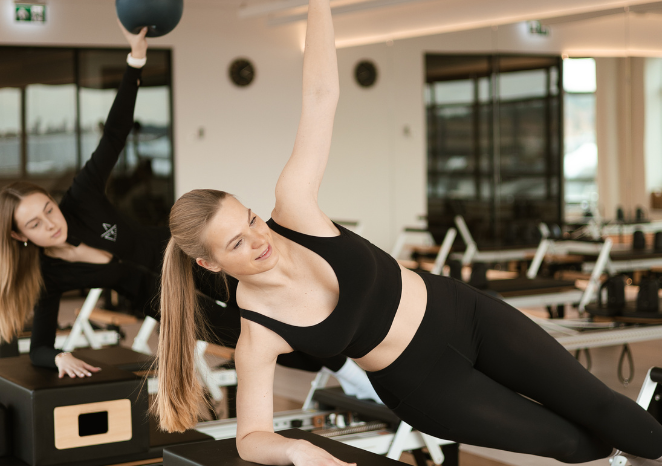
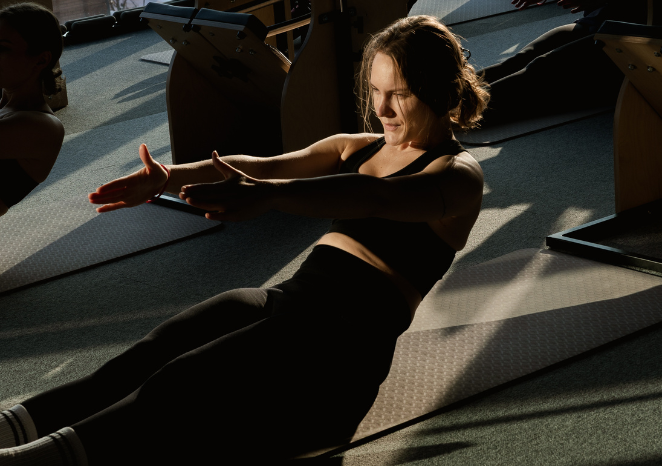
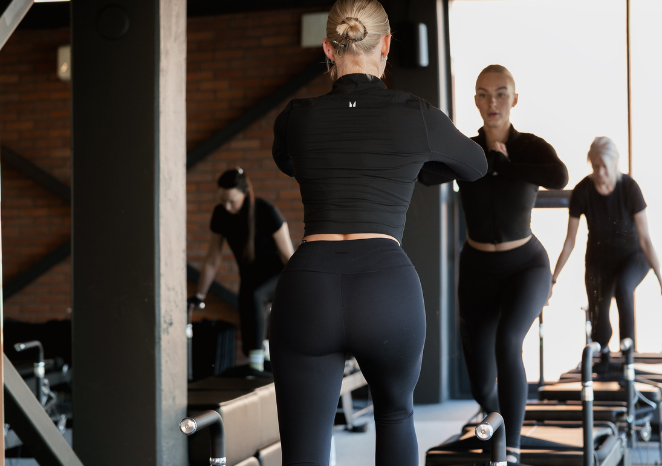
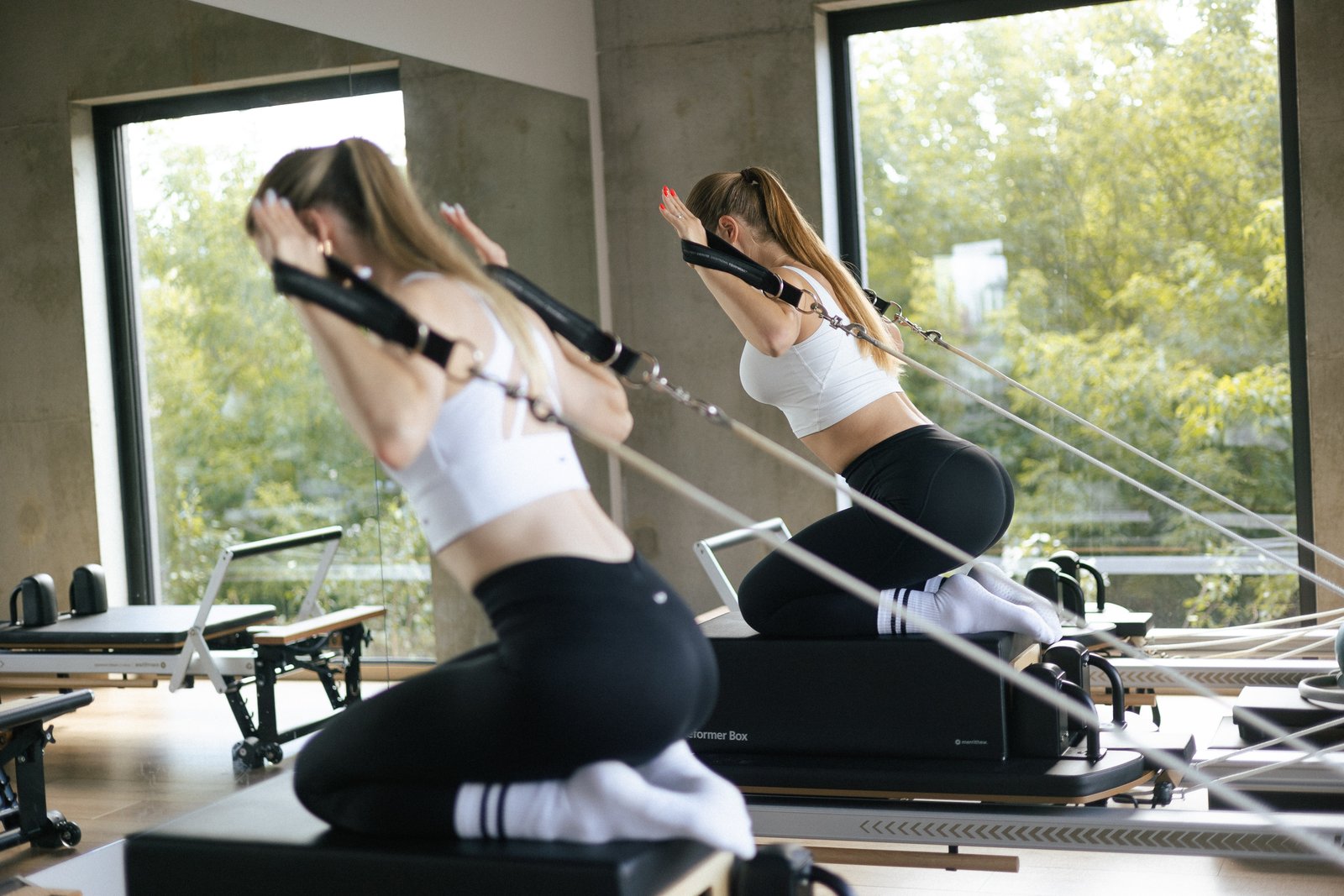
Pilates has become one of the most popular forms of exercise worldwide today. More and more people — women especially — are drawn to it for how safe and effective it is, and for its unique ability to build strength while calming the mind. It’s a practice that does more than sculpt a lean physique; it teaches you to move with intention, through control, breath, and grace.
Still, a common question comes up: what’s the difference between Pilates Reformer and mat Pilates, and which one should you start with? Both share the same core goal — helping you get to know your body and build strength from the inside out. But the path to get there looks a little different for each.
Mat Pilates relies on your own bodyweight and helps you learn to feel movement from within, while the Pilates Reformer machine opens up new possibilities — its spring system lets you control movement more precisely, hold your balance, and engage muscles on a deeper level.
In this article, we’ll look at how these two practices differ, who each one suits best, and which is more effective for building strength and balance in the body. Sharing her insights is Gabija Juralovičė, certified Pilates trainer and founder of the MyPilates Reformer studio network, who works with hundreds of women every day and knows exactly how to help them find the right way to move.
What’s the Difference Between Mat Pilates and Pilates Reformer?
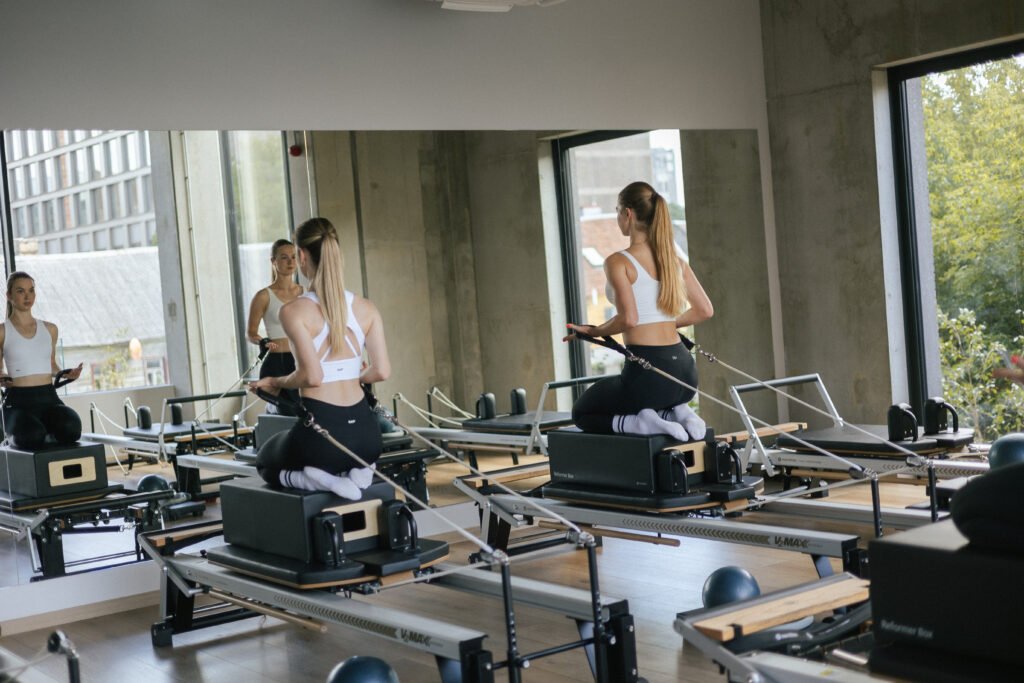
While both methods are rooted in the same Pilates philosophy, the experience of practicing them can feel quite different. Mat Pilates uses only your own bodyweight along with a few simple props — a resistance band, a ball, or a ring. Pilates Reformer, on the other hand, takes place on a specialized machine with a spring system, a sliding carriage, and adjustable resistance, allowing for a much wider and more precisely controlled range of movement.
Reformer classes let you work through a broader spectrum of movement — from subtle stabilizing exercises to combinations of strength and stretch work. The equipment helps you maintain balance, hold proper alignment, and activate deeper muscles more effectively, all while reducing strain on the joints.
Mat-based workouts, by contrast, demand more internal control and body awareness, since there’s no external resistance or support to rely on. It’s a great way to build coordination, breathing technique, and the ability to work purely with your own bodyweight.
| Feature | Mat Pilates | Pilates Reformer |
|---|---|---|
| Equipment | Just a mat and simple props | Reformer machine with springs, carriage, and adjustable resistance |
| Movement control | Requires more independent body control | The machine helps maintain stability and precision |
| Adjusting difficulty | Depends on bodyweight and exercise choice | Resistance easily adjusted via springs |
| Exercise variety | Mostly static or floor-based exercises | Hundreds of variations across multiple directions |
| Best for | Getting familiar with the method, beginners | Those wanting more precision, posture correction, or deeper strength work |
Both practices have their strengths, but Reformer gets you to that same level of control faster — with a lower risk of injury and deeper muscle engagement.
“Reformer training lets you activate deeper muscles more precisely and maintain proper alignment. Because of this, muscles strengthen more evenly, and results are usually felt faster than with mat work alone.”
— Gabija Juralovičė
When Should You Choose Mat Pilates?
Mat Pilates is a great choice for beginners looking to get familiar with the core principles of the method and learn how to properly control their body. These workouts help build core strength, improve posture, and develop breath control. Mat exercises are especially well-suited for anyone wanting to ease into exercise gently and gradually, without needing any equipment.
Mat Pilates is a good fit if you want to:
- learn the basics of breathing and core activation
- strengthen stabilizing muscles and improve posture
- build better balance and coordination
- safely return to physical activity after a long break or a minor health issue
- develop body awareness and better control over your movement
That said, after a while your body adapts to these exercises and progress slows down. That’s exactly when Pilates Reformer becomes the natural next step — the machine lets you engage muscles more deeply, work with greater precision, and see results faster, all while keeping full control over your movement.
So if you’re wondering how to start with Pilates, mat classes are a great way to learn your body and the fundamentals of the method. Moving on to Reformer afterward opens up more possibilities for building strength, improving flexibility, and achieving full-body balance.
“Mat classes are a great way to learn to control your body and your breathing. But once you’ve built a certain level of stability, Reformer lets you refine your precision and take things to the next level.”
— Gabija Juralovičė
When Is Pilates Reformer the Right Choice?
Pilates Reformer is the natural next step after mat classes, once you’re ready for more precision, more variety, and deeper muscle engagement. It helps expand your range of movement and build full-body strength.
The machine’s springs and adjustable resistance let you reach muscles that are harder to activate on a mat. That’s why Reformer helps improve muscle balance, coordination, and core strength. Workouts become more precise, and results come faster — all while staying safe and maintaining proper movement control.
Benefits of Pilates Reformer:
- activates deep muscle layers and strengthens the core
- improves posture, stability, and balance
- reduces joint strain — suitable even after injury or during rehab
- resistance can be adjusted to match your fitness level
- offers a wider range of exercises and faster progress
Who Reformer Pilates is for:
- beginners who want to work precisely and safely right from the start
- more advanced practitioners looking to build further strength
- people dealing with posture, back, or joint issues
- anyone looking for an effective yet gentle form of exercise
The benefits of Pilates Reformer go beyond the physical — they extend to emotional wellbeing too. Regular sessions improve posture, ease back tension, strengthen deep muscles, and encourage mindful breathing.
“Reformer lets you immediately feel where your body is strong and where it needs more attention. It’s a very clear feedback system — it helps you understand your body and adjust your movement in real time.”
— Gabija Juralovičė
Trainer Insights
Reformer Pilates is rapidly gaining popularity among women seeking deeper body work and lasting results. Certified Pilates instructor and MyPilates founder Gabija Juralovičė shares her experience and explains how this method differs from classic mat exercises — and why it’s becoming a natural choice for so many.
How does Reformer Pilates go beyond classic mat exercises?
Trainer Gabija says the key difference lies in how the body works and how quickly you can feel progress.
“Reformer allows for deeper muscle engagement and more precise body control. Mat exercises build awareness and coordination, but the machine’s resistance helps you better understand direction and stability in movement. The body starts working more precisely, and results show up faster.”
What changes do you typically notice in your clients’ bodies?
According to Gabija, the changes become clear not just visually, but in how clients feel during everyday movement.
“Posture and muscle tone are usually what change most. The core, back, and pelvic muscles get stronger, and tension in the shoulders disappears. Balance improves, and movement becomes smoother and easier. Reformer helps restore symmetry in the body — both sides start working more evenly.”
Is Reformer suitable for beginners?
The trainer believes Reformer often helps beginners understand faster how their body should work, since the resistance provides more feedback.
“Reformer suits everyone — from complete beginners to advanced practitioners. Because resistance is adjustable, every session can be tailored to your personal fitness level. Reformer helps you feel how your deep muscles engage more quickly, which builds beginners’ confidence and motivation to keep going. No matter where you start, Reformer helps you connect with your body on a deeper level, so results come faster and last longer.”
How often should you train to see changes?
Trainer Gabija emphasizes that consistency matters more than intensity — it’s regularity that allows the body to adapt and change.
“You can start feeling noticeable results within a few weeks, but lasting change comes once training becomes a regular habit. The optimal frequency is 2–3 times a week. At that pace, the body doesn’t just get stronger — it also learns to move correctly in everyday life.”
These insights show that Pilates Reformer isn’t just a piece of equipment — it’s a complete method for training the body, helping you find balance between strength, control, and mindful movement.
Which One Should You Choose?
When deciding between mat Pilates and Pilates Reformer, it’s worth considering your personal goals and current fitness level.
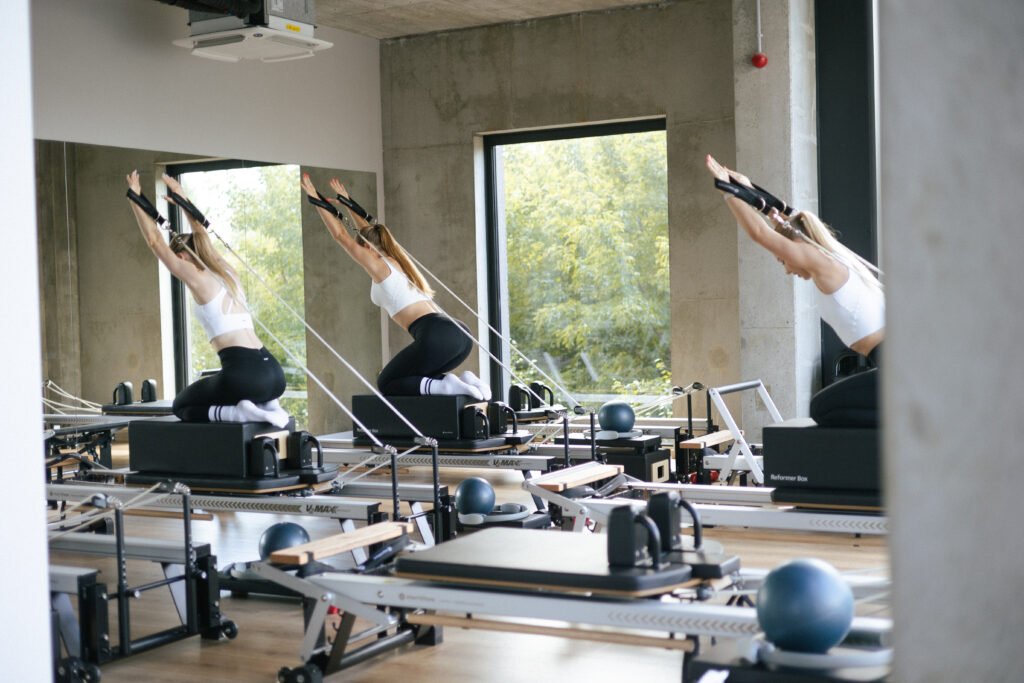
If you want to start with the basics and get familiar with the method’s core principles, mat Pilates can be a great starting point. But if you’re after more precise body control, want to activate deep muscles, and want to see results faster, Reformer Pilates can be both a natural progression and a great place to begin. This form of training lets you safely increase intensity, strengthen your whole body, and maintain proper posture.
Try Reformer Pilates with trainer Gabija Juralovičė and experience how your body control, posture, and energy levels shift — often after just a few sessions.
“The essence of Pilates isn’t doing as many exercises as possible — it’s learning to move with intention. Reformer makes that process more effective and helps you maintain good posture and body balance long-term.”
— Gabija Juralovičė
Frequently Asked Questions
What’s the difference between Pilates Reformer and mat Pilates?
Pilates Reformer is done on a specialized machine with springs that let you adjust resistance and work more precisely with deep muscles. Mat Pilates relies on bodyweight and focuses more on building coordination, balance, and mindful movement control.
Is Reformer Pilates harder than mat Pilates?
Not necessarily. Reformer Pilates can range from low to medium/high intensity, depending on the type of session and your fitness level. Thanks to the machine’s design, exercises are often even safer, since it helps maintain correct body positioning and reduces strain on the joints.
Which workout is better suited for beginners?
Mat Pilates is great for beginners who want to learn the fundamentals of the method, breathing, and body control. But Reformer Pilates works well for beginners too — resistance can be easily adjusted, keeping sessions safe, effective, and helping you feel your body working sooner. MyPilates studios also run weekend intro Reformer sessions that walk beginners through the basics of the method and the machine itself.
Is Reformer Pilates suitable for people with back issues?
Yes, Reformer Pilates is especially well-suited for people with back or posture issues. The machine helps maintain proper alignment, reduces strain on the spine, and strengthens the deep muscles that support the back. Because of this, Reformer is often used even during rehabilitation.
Which is better — mat Pilates or Pilates Reformer?
There’s no one-size-fits-all answer — the better option depends on your goals and current fitness level. Mat Pilates is great for learning the basics: breathing, core activation, and mindful movement. It’s a solid starting point for getting to know your body. Pilates Reformer is more often chosen when you want greater precision, faster progress, and deeper muscle engagement. Thanks to adjustable resistance, it works well for beginners and advanced practitioners alike, and the machine itself helps you maintain proper alignment more safely. In short: mat is a great foundation, Reformer is a deeper, more effective next step.
Conclusion
Both mat Pilates and Pilates Reformer are valuable ways to build strength, improve balance, and boost overall wellbeing. Both practices share the same core principles — mindfulness, breath, and body control — but the path to get there can look different.
Mat classes help you get to know your body, build focus, and learn to listen to your breath. Reformer, meanwhile, lets you go a step further — engaging more precisely with movement, feeling your deep muscles at work, and building strength safely from within.
Reformer isn’t just a machine — it’s a tool that helps you understand your body better. It lets you feel exactly how each muscle moves and creates a genuine mind-body connection. For many, it becomes more than just a new way to exercise — it becomes a whole new relationship with movement.
No matter where you start, what matters most is making movement part of your everyday life. And if you feel your body is ready for the next step — maybe it’s time to try Reformer and discover a new sense of ease and balance in your body.