
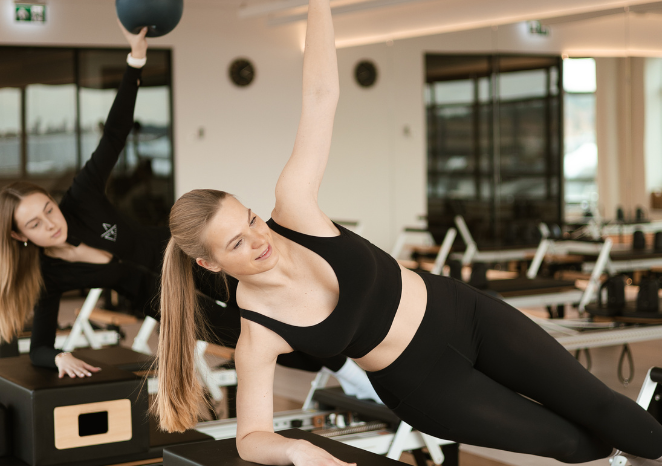
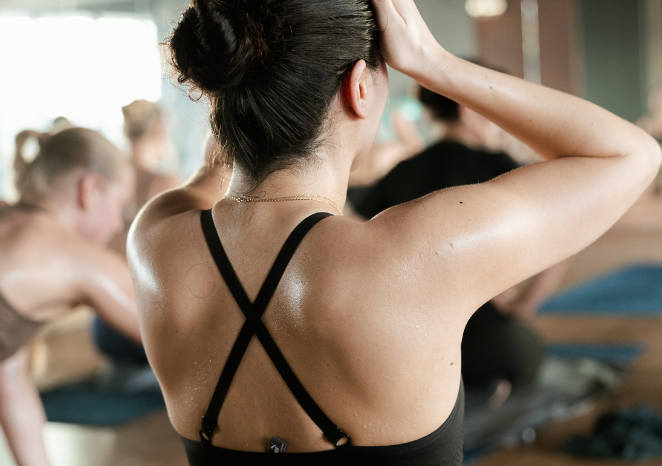
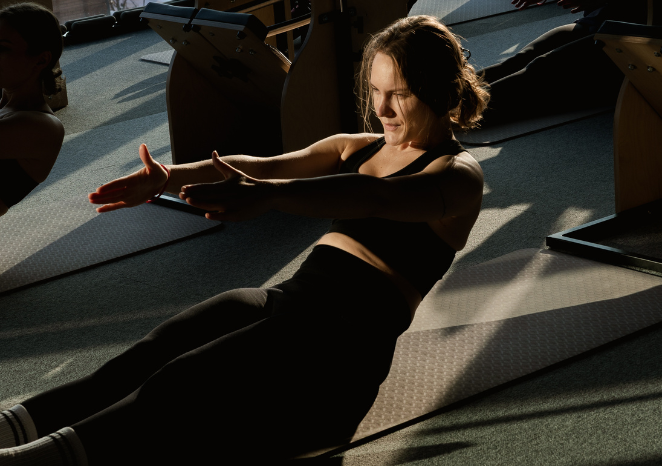
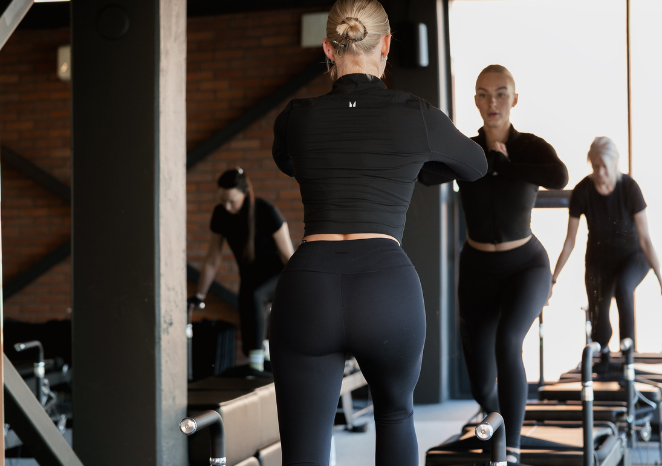
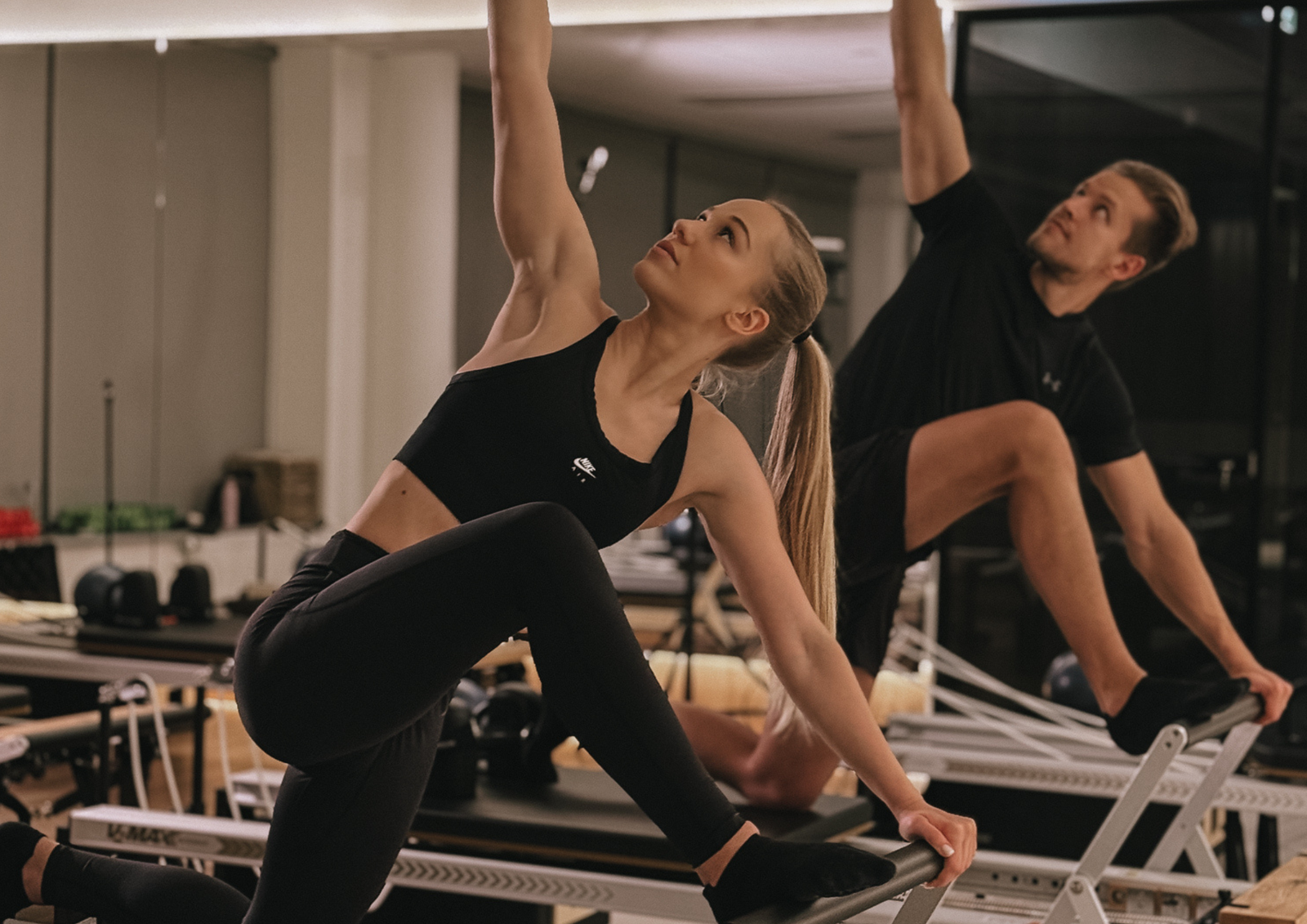
These days, with life moving faster than ever and stress becoming part of the daily routine, more and more people are looking for ways to unwind and build a stronger body. That’s where Pilates comes in — a training method that’s steadily gaining popularity, not just among seasoned athletes, but among beginners too. Starting Pilates comes with a long list of benefits — from a more toned body, weight loss, and better flexibility, to improved emotional wellbeing. We want as many people as possible to fall in love with this method, so in this article, we’ll walk you through everything you need to know.
What Is the Pilates Training Method?
Pilates isn’t just exercise — it’s a whole philosophy built around bringing body and mind together. The method is designed to improve not just physical fitness, but also focus, awareness, and overall harmony throughout the body.
Mind-Body Connection
Every Pilates exercise is designed to bring the body and mind together. That means each movement is performed with intention, attention, and focus. Your mind stays actively engaged, constantly tracking how you’re working against gravity, how your muscles engage, and how you breathe. Breathing is one of the core principles of Pilates — you learn to breathe correctly, deeply, and fully, so your muscles get the oxygen they need. Breath also helps you focus, control your movement, and stay attuned to every detail of each exercise. This focus on mind and breath matters — it helps you progress faster and, just as importantly, safely, which is especially valuable if you’re just starting out.
Full-Body Movement
Pilates isn’t about isolated, individual movements — it’s a complete system where every exercise is like a link in a chain, contributing to overall balance and harmony in the body. Exercises are designed so every part of the body plays a role in the movement, ensuring both efficiency and symmetry.
Adaptable to Everyone
One of the biggest advantages of Pilates is just how adaptable it is. Regardless of age, fitness level, or health condition, the method can be tailored to any individual. That’s especially valuable for beginners, since exercises can be adjusted to fit personal needs and abilities. With the Pilates Reformer, you can dial the difficulty up or down by adjusting the resistance level — so the exercises work just as well for advanced athletes as they do for someone taking their first steps or recovering from an injury. It’s also worth mentioning just how much variety Pilates offers. You can adjust the resistance and try hundreds of different exercises as your goals evolve. That means you can practice Pilates for years, continuously improving and setting yourself new challenges.
What Are the Benefits of Pilates?
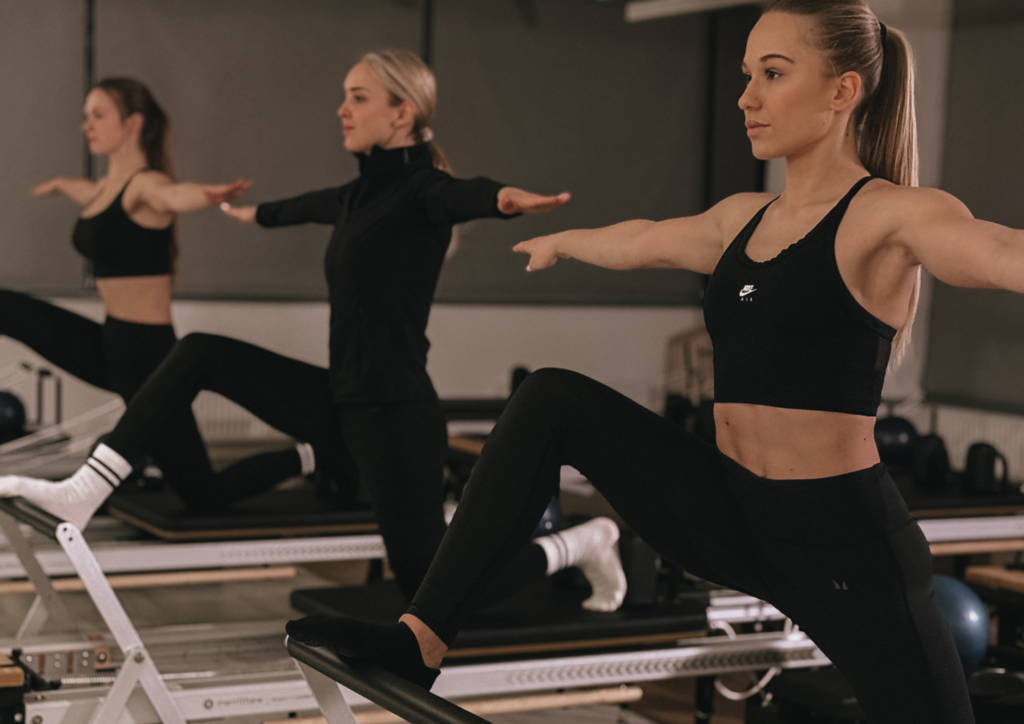
When people are looking for the right kind of workout, a lot of factors come into play: Is it effective? Is it safe? Will I actually enjoy it? Pilates offers a range of unique benefits that keep drawing more and more people to make it their go-to workout. So what makes Pilates stand out for beginners compared to other training methods? Here’s a closer look.
- A full-body workout. Pilates activates every muscle in your body, especially your core and stabilizing muscles. That means not only will your body look more toned, it’ll function better too.
- Body transformation and weight management. Whether your goal is to lose weight, build muscle, or simply tone up, Pilates can help. The workouts are intense enough to burn calories and support weight management, and the resistance created by the Reformer helps build and strengthen muscle.
- Increased flexibility. Whether you’re an experienced athlete or just want to be able to bend down without discomfort, Pilates can help. The exercises improve flexibility, reduce your risk of injury, and increase your range of motion.
- A personalized approach. Some people worry they won’t be able to keep up with certain Pilates exercises. But our team of professionals is here to adapt to each client’s needs, ensuring every session is safe and effective. Even in group classes, you still get individual attention. You can also adjust the difficulty of every exercise yourself, which makes this method ideal if you’re just starting out.
- Unmatched health benefits. Pilates can help improve circulation, boost muscle tone, ease back pain, strengthen your immune system, and much more. There are real psychological benefits too — Pilates isn’t just about the body, it’s about the mind as well. You’ll learn focus, breathing, and how to properly engage your muscles, all of which not only improves your physical condition but also helps you relax and reduces stress.
- Builds a sense of community. In our Pilates studio, you’ll find more than just an effective workout — you’ll find a community. There’s something reassuring about knowing you’re not chasing your goals alone.
What Pilates Class Formats Can You Choose From?
Modern Pilates studios offer a range of class formats to match your goals, fitness level, and preferred intensity. Some of the most popular options include classic Reformer Pilates, Pilates Chair, Jumpboard, and Tower classes.
Read more about each format here:
If you’re after a more intense experience in a heated room, we also offer Hot Pilates. Read more:
Pilates: Should You Choose Mat Classes or Reformer?
Both formats have their own strengths and suit different needs. Pilates Reformer offers a unique, often more effective alternative to traditional mat classes. These sessions use a specially designed machine called the “Reformer,” which brings extra benefits and possibilities that help you get the most out of every workout. Most experts agree that the Reformer is particularly valuable for beginners looking to see results quickly and safely.
- More effective training. First, the Pilates Reformer lets you train different muscle groups more precisely and effectively. Mat classes often rely solely on bodyweight, which can be limiting. The Reformer lets you adjust the load, allowing you to work certain muscle groups more intensely and build a more balanced training program.
- Movement control and safety. Second, Reformer Pilates helps improve movement control and body awareness. The Reformer’s built-in resistance system requires constant control and stability to perform movements correctly. This helps ensure proper alignment and better movement awareness — both essential for improving coordination and posture. Another benefit: Reformer Pilates often reduces strain on the joints, making exercises safer to perform. This can make it a better option for people with joint issues, since the Reformer absorbs impact and reduces joint stress, helping lower the risk of injury and pain.
- Personalization. Third, Reformer Pilates can be tailored more precisely to each person’s needs and abilities. The Reformer’s configuration can be adjusted to offer different resistance levels and exercise variations. That means there’s an enormous range of exercises available — from beginner-friendly moves to advanced variations — so a training program can be built around each person’s level and goals.
- Exercise variety. Finally, Reformer Pilates tends to be more engaging and motivating thanks to the sheer number of exercises you can do on the machine. This opens the door to more creativity and a wider range of movement, which can boost both motivation and enjoyment during your workouts.
How to Prepare for Your First Pilates Class
Pilates Reformer can look more intimidating at first than it actually is. If you’re not sure where to start, we recommend trying a private session first. Here, at your own pace and tailored to your needs, our experienced trainers will introduce you to the method and the Reformer machine, walk you through the basic exercises, and answer any questions you have.
We also run intro group classes designed specifically for first-timers. These are clearly marked on the schedule and built for anyone trying the method for the first time.
If you’ve already tried mat Pilates or another sport, you’re welcome to jump straight into a group class. Just let your trainer know it’s your first time, and we’ll make sure you get some extra attention so you understand the exercises and perform them safely.
Basic Pilates Exercises for Beginners
Exercise 1 — Footwork Series:
- Lie down on the Reformer with your shoulders against the shoulder rests and your feet on the footbar.
- Keeping your core engaged and your back stable, extend your legs, pushing yourself away from the footbar.
- Bend your legs and return to the starting position.
- Repeat 8–12 times in each foot position.
Exercise 2 — The Hundred:
- Lie down on the Reformer with your shoulders against the shoulder rests, feet on the footbar, and straps around your hands.
- Exhale as you lift your head, neck, and shoulders off the carriage, sweeping your arms downward and holding them by your sides.
- Continue breathing steadily while pumping your arms up and down in small movements, until you’ve completed 100 pumps.
- Afterward, lower your back down, rest your head on the headrest, and bring your feet back to the footbar.
Exercise 3 — Rowing Series:
- Start seated on the Reformer with your legs extended in front of you, facing away from the footbar, feet between the shoulder rests. Hold the straps in your hands.
- Exhale as you pull the straps to the sides, rounding your back and lowering your upper body over your legs.
- Return to the starting position, keeping your core engaged throughout.
- Repeat 8–12 times.
Exercise 4 — Short Spine Stretch:
- Lie down on the Reformer with your shoulders against the shoulder rests, straps around your feet, and legs extended in front of you.
- Keeping your core engaged, draw your legs toward you by bending only at the hips, and once you feel a stretch in the back of your legs, slowly and carefully begin lifting your pelvis and the rest of your spine, one vertebra at a time, until your feet end up directly above your head.
- Bend your knees and slowly lower your spine back down, returning to the starting position.
- Repeat 5–6 times.
Exercise 5 — Leg Slides:
- Lie down on the Reformer with your shoulders against the shoulder rests and your feet on the footbar, knees and hips bent at a 90-degree angle.
- Place your hands on the edges of the carriage, or hold onto the handles at the shoulder rests.
- Lift one leg off the footbar while pushing yourself away from the footbar with the other leg, until your supporting leg is fully extended at the knee and hip. Keep your core engaged and your movements slow and controlled.
- Slowly return your leg to the starting position, bending the knee and bringing your foot back onto the footbar.
- Repeat on the other leg. Do 8–10 reps per leg.
How Often Should You Do Pilates Each Week?
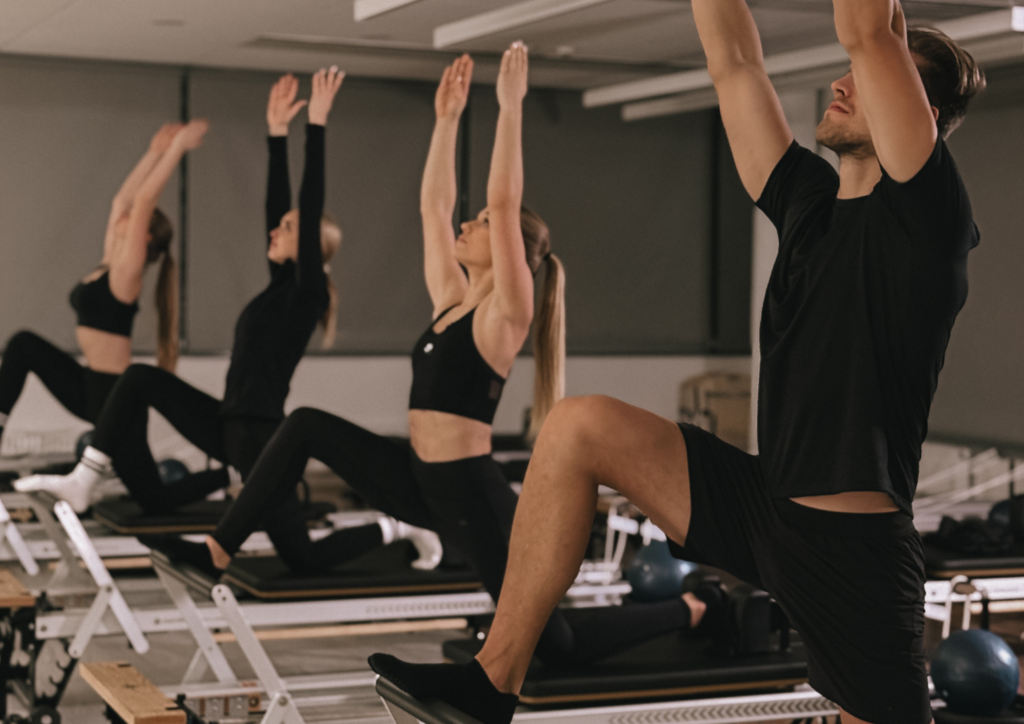
Consistency is key to success in any kind of training — regular sessions are what drive steady progress in strength and flexibility. That’s why we recommend beginners attend at least 2 sessions a week, moving up to 3–4 times a week once your body adjusts to the workload.
Is Pilates Right for Everyone?
When people consider starting a new form of exercise, a common question comes up: is Pilates really right for me? Is it truly for everyone? The short answer is yes — Pilates is suitable for almost anyone.
- Versatility and adaptability. One of the greatest strengths of Pilates is how adaptable it is. Regardless of age, fitness level, or health condition, the method can be tailored to any individual. Beginner exercises can be adapted or simplified to match your current level, while more advanced variations exist to challenge even the fittest athletes.
- A personalized approach. At our Pilates studio, individual attention is a top priority. Every client gets personal guidance, ensuring each session stays safe, effective, and suited to their needs. So even if you’re managing certain health issues or pain, our instructors can adapt and build a program around exactly what you need.
- Not just for women. Many people assume Pilates is only for women — but that couldn’t be further from the truth. Pilates was actually developed for the male body — its creator, Joseph Pilates, originally built the practice as a way to build strength and increase flexibility. So for men looking to strengthen their muscles, improve mobility, or boost performance in other sports, Pilates is an excellent choice.
- A sense of community. At a Pilates studio, you’re not just training — you’re joining a community. It’s a chance to connect with people who share similar goals and to draw support and motivation from them. Even if you’re unsure whether Pilates is right for you, we encourage you to give it a try — that sense of community can be exactly what helps you commit and stay motivated.
Summary
Given everything Pilates has to offer, it’s no surprise it’s becoming increasingly popular among beginners, especially those looking to get back into an active lifestyle. If you’re ready to invest in your health and wellbeing, Pilates is one of the best investments you can make. Whether you’re young or older, a beginner or an experienced athlete, Pilates is a flexible, adaptable training system that can meet the needs of just about anyone.
We look forward to seeing you in our studio, where you can discover which beginner Pilates exercises work best for you — and experience the transformative power of Pilates for yourself.
Frequently Asked Questions
Is Pilates suitable for beginners?
Yes — Pilates classes suit people at every fitness level. Most exercises can be adapted individually.
What’s the difference between Reformer Pilates and mat Pilates?
Reformer Pilates uses a specialized spring-based machine, while mat Pilates is typically done using just your own bodyweight.
Does Pilates help with posture?
Yes — Pilates strengthens deep muscles and improves body control and posture.
How long does it take to see results?
Most people start noticing changes after just a few weeks of regular training.
Is Hot Pilates suitable for beginners?
Yes, though we recommend starting with a lower-intensity class the first time.
Find the Right Class for You
From classic Pilates to Hot Pilates or more intense Reformer formats, MyPilates studios offer a range of classes for every goal and fitness level.
Not sure where to start? Our trainers are happy to help you find the class that’s right for your goals, how you’re feeling, and your experience with movement so far.